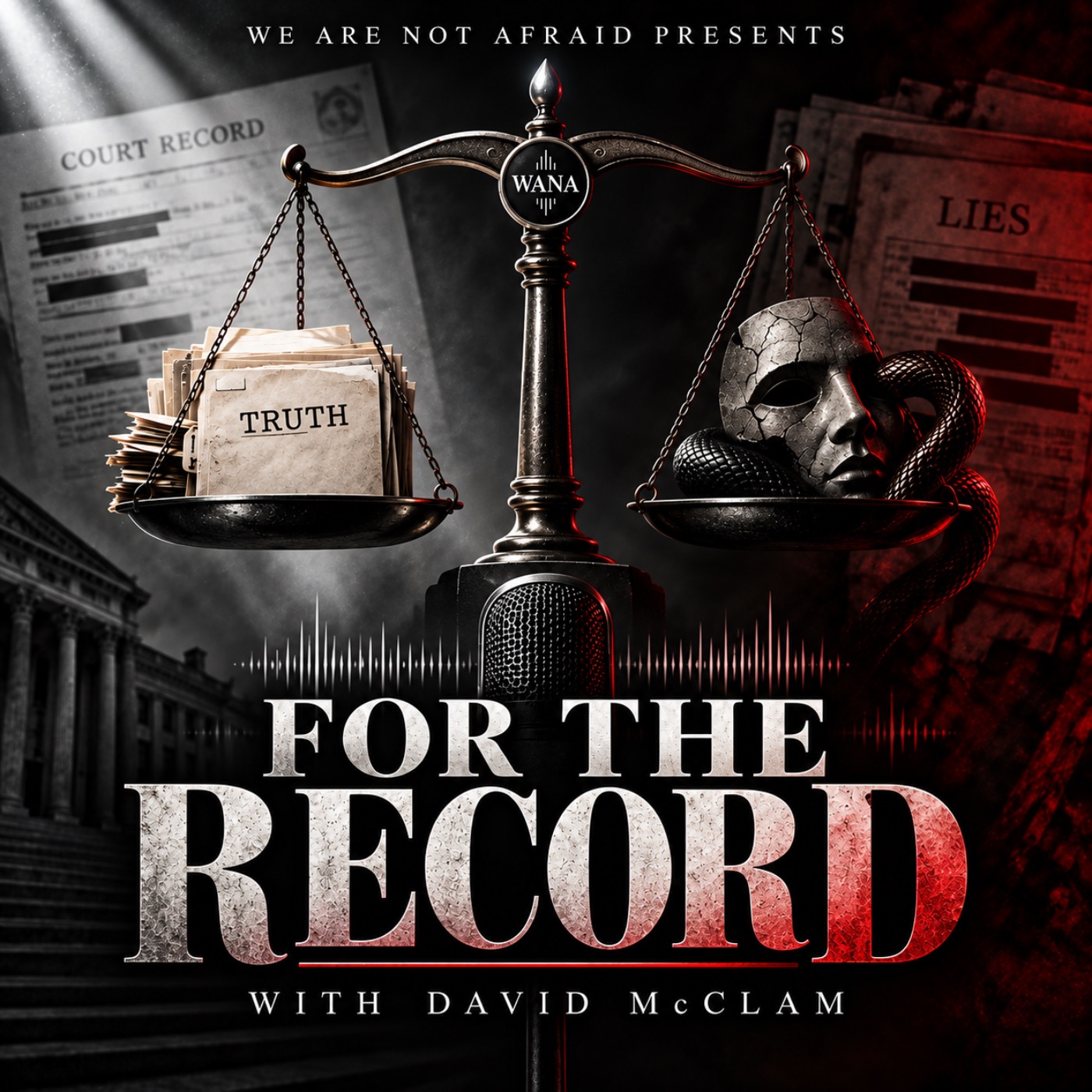
No Way, José Ep 8 SPECIAL ANNOUNCEMENT: Who Is Anthony Christopher Rocko Pt 1
For all of the recipes in the episode and others. Check and join our SubStack
If the information you are looking for is not there, check back as it will be coming soon!
Before we continue with No Way, José, we need to introduce you to someone who became increasingly important as we examined PRETEND’s Who’s Afraid of LaDonna Humphrey?
His name is Anthony Christopher Rocko.
And over the next five episodes, we are going to take a much closer look at him.
This special five-part No Way, José miniseries examines Anthony Christopher Rocko’s credibility, his history, his public statements, the documentary record surrounding him, and one question that should have been answered before his allegations were presented to PRETEND’s enormous audience:
How thoroughly did Javier Leiva vet this source?
What began as background research quickly became something much larger.
We found records.
Then more records.
Then contemporary newspaper reporting.
And eventually, Anthony Christopher Rocko became a story all by himself.
This series is not built around anonymous internet accusations, speculation, or personal attacks.
We are going back to the records.
We will compare Anthony’s statements with contemporaneous reporting, examine the chronology, separate documented facts from allegations, and ask what information was available before PRETEND placed Anthony behind the microphone and asked its audience to evaluate allegations he made about someone else.
It starts in Shawnee, Oklahoma
One of the earliest stories we examine involves an organization called Labor of Love Charities.
Anthony Christopher Rocko founded Labor of Love with a public mission of helping homeless people.
There were volunteers.
There were donations.
There were efforts to feed people in need.
And there were plans for a homeless shelter.
Contemporary reporting described a project that appeared to be moving toward becoming something substantial.
Then the story changed.
According to an August 2010 report in The Shawnee News-Star, approximately $15,000 had been donated toward the effort.
Anthony had also publicly discussed Labor of Love being under contract to purchase a building intended for the shelter.
But Anthony did not ultimately purchase the property.
Other people did.
One of the men involved in buying the building, John Winterringer, gave the newspaper a statement that now takes on enormous significance:
“People need to know where their money went.”
That statement did not come from LaDonna Humphrey.
It did not come from Reddit.
It did not come from someone involved in the later PRETEND controversy.
It came from someone speaking to a newspaper in 2010, while the Labor of Love situation was unfolding.
The newspaper also reported that Anthony later discussed offering the building for sale at the best possible price.
There was a major problem with that statement.
He did not own the building.
The reporter asked Anthony how he could sell property he did not own.
According to the article, he declined further comment on that issue.
That exchange represents exactly the kind of source scrutiny this miniseries is about.
Ask the uncomfortable question.
Identify the contradiction.
Give the person an opportunity to explain it.
Then report what happened.
Not long afterward, Anthony announced:
“Labor of Love is dissolved. It is no more.”
And that is only the beginning
Over the course of five episodes, we will examine records concerning how Labor of Love was organized, what Anthony represented about the organization, what Oklahoma records reportedly showed, and how the effort went from public excitement about a homeless shelter to dissolution in a remarkably short period of time.
But Labor of Love is only one chapter.
Throughout this miniseries, we will examine Anthony Christopher Rocko using the same kind of scrutiny PRETEND encouraged its audience to apply to everyone else.
We will look at:
Anthony’s own statements.
Contemporary reporting.
Documents and records.
Chronology.
Contradictions.
The allegations he later made.
What he told Javier Leiva.
What PRETEND told its audience.
And what information could have been discovered before those allegations were broadcast.
At the center of all five episodes is a basic principle of investigative journalism:
Who exactly is your source?
Credibility is not something a reporter should investigate only when someone challenges the story.
Source vetting is not optional because someone gives a compelling interview.
And corroboration means more than finding several people who dislike the same person.
If an investigative series is going to spend hours asking its audience to question another person’s honesty, then the credibility of the people making those accusations deserves equally serious examination.
That is what this miniseries intends to do.
Five episodes.
One source.
Documents.
Contemporary reporting.
Anthony Christopher Rocko’s own words.
And a question we will return to again and again:
Who is Anthony Christopher Rocko, and why wasn’t PRETEND’s audience given the full picture of one of the sources it was being asked to trust?
The receipts are coming.